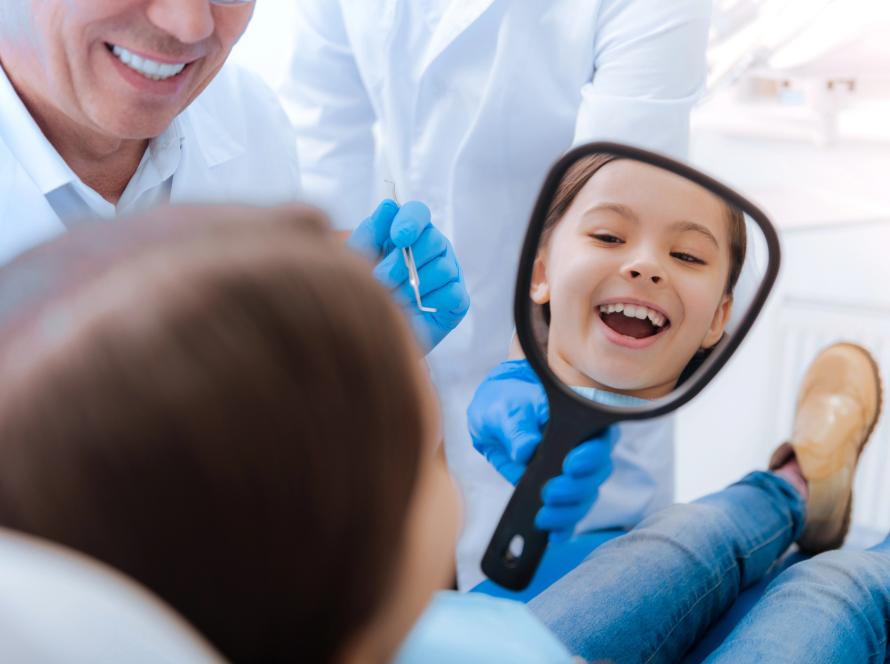
A child’s smile does not develop all at once. It unfolds through a sequence of baby teeth loosening, permanent teeth emerging, and the jaws continuing to grow. Rather than judging alignment from a single crowded tooth, a child’s dental checkup can reveal whether the entire sequence is progressing as expected.
This growth-based perspective provides a more meaningful picture of orthodontic readiness—and may identify concerns before they begin to affect comfort, function, or kids’ oral health.
Orthodontic Readiness Is About Patterns, Not Perfection
A mixed smile can look uneven while baby and permanent teeth share the mouth. Temporary gaps, mildly rotated teeth, and differences in tooth height may reflect an unfinished stage of development.
The more informative question is whether the changes follow a healthy pattern. During a child’s dental checkup, the dental team may assess:
- The order and timing of tooth loss and eruption
- Whether matching teeth appear at reasonably similar times
- The space available for incoming permanent teeth
- How the upper and lower teeth meet
- Whether the jaw shifts when the child bites
- Changes in chewing, speech, or oral habits
This helps distinguish a smile that is still organizing itself from one that may benefit from further assessment.
The Eruption Timeline Can Reveal Hidden Clues
Parents often focus on how straight the visible teeth appear, but timing can be equally important. Losing a baby tooth unusually early may allow nearby teeth to drift into the space intended for its permanent replacement. A baby tooth that remains much longer than its matching tooth on the opposite side may also warrant investigation.
Another useful clue is asymmetry. Children do not develop with perfect calendar precision, but a permanent tooth appearing on one side without its counterpart emerging for an extended period may indicate delayed eruption, limited space, or an unusual eruption path.
Regular pediatric dental visits create a record of these changes. Comparing today’s findings with previous checkups can reveal a developing pattern that might be missed in a one-time examination.
Watch How the Bite Works
Early alignment signals are not always obvious in photographs. Some become apparent only when a child speaks, chews, or closes their mouth.
A lower jaw that slides sideways before the teeth fit together may suggest a functional shift. If the upper teeth close inside the lower teeth, this may indicate a crossbite, while front teeth that do not meet may point to an open bite. Difficulty biting into food, frequent cheek biting, or unusual tooth wear can provide additional information about how the bite functions.
These signs do not automatically mean a child needs braces immediately. They indicate that the child’s dental development should be monitored and, when appropriate, evaluated for early orthodontic care.
Everyday Habits Belong in the Alignment Conversation
Thumb or finger sucking, prolonged pacifier use, and ongoing mouth breathing may influence—or accompany changes in—oral development. Parents should mention these observations during a child’s dental checkup, especially if they occur alongside snoring, restless sleep, speech concerns, or difficulty keeping the lips comfortably closed.
Mouth breathing can have several causes, so it should not be diagnosed based on tooth position alone. A dentist may recommend discussing persistent breathing or sleep symptoms with the child’s physician or another appropriate healthcare provider.
Kids’ Oral Hygiene Supports Orthodontic Readiness
Alignment and cleanliness are closely connected. Crowded or overlapping teeth can create narrow spaces that are harder to brush and floss. Plaque accumulation and inflamed gums may complicate future orthodontic treatment, making consistent kids’ oral hygiene important before any appliance is considered.
Parents can support kids’ oral health by supervising brushing, cleaning between teeth where contacts are closed, and attending routine dental visits. If orthodontic treatment becomes appropriate, establishing these habits beforehand can make daily care much easier.
Early Assessment Does Not Always Mean Early Treatment
An early orthodontic evaluation may result in treatment, periodic observation, or no intervention at all. The goal is not to rush every developing smile into braces. It is to recognize concerns that may respond differently while the jaws are still growing.
A children’s dental checkup turns orthodontic readiness into an ongoing developmental conversation. By tracking eruption, bite function, habits, and hygiene over time, families can make decisions based on how the smile is growing—not simply how it looks today.